You do not need perfect equipment or racing experience for your first obstacle course race. A realistic distance, functional clothing and a relaxed plan are the best foundation.
Choose the right race
Short formats of roughly three to six kilometres are often a good first step. Do not judge the race by distance alone: elevation, obstacle count and the character of the event can make a major difference. Fun or open waves are usually less pressured than competitive heats. Before registering, also check the minimum age, cut-off times, mandatory kit, rules on obstacle assistance and how bib collection works.
Your race week
Avoid hard experiments. Sleep, easy movement and your normal food routine matter more now.
Check your travel plan, parking, start time, documents, clothing, shoes, towel and dry kit.
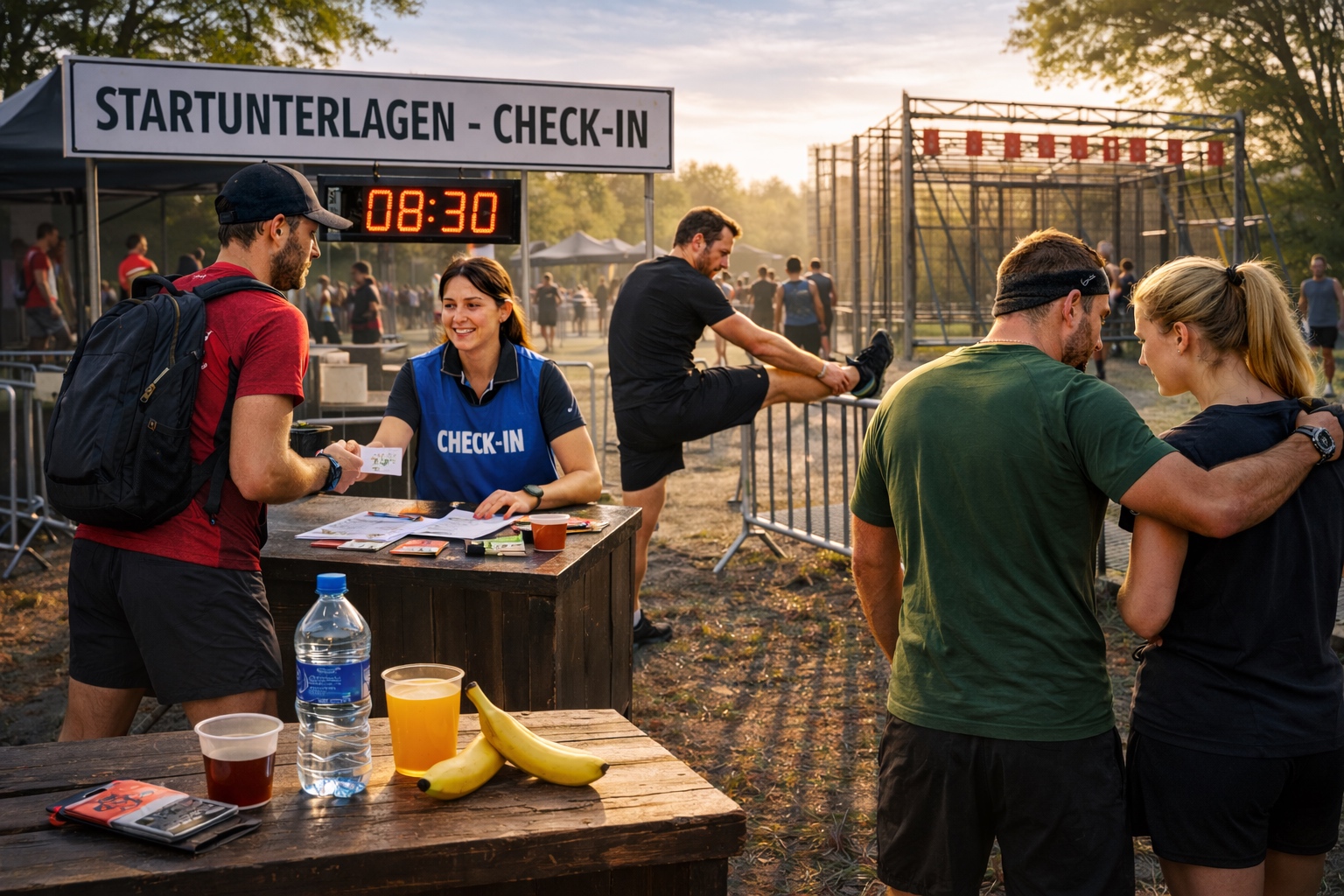
Arrive early, check in calmly, eat and drink familiar things and complete a short dynamic warm-up.
The short packing list
On the course
- Trail or running shoes with reliable grip
- Close-fitting, quick-drying clothing
- Race bib and any mandatory equipment
- Optional lightweight gloves – tested beforehand
For afterwards
- A complete change of clothes and dry shoes
- A large towel and bag for wet gear
- A familiar drink and snack
- A warm layer for after the finish
“The goal of your first OCR is not perfection. It is discovering why you want to start again.”
On the course
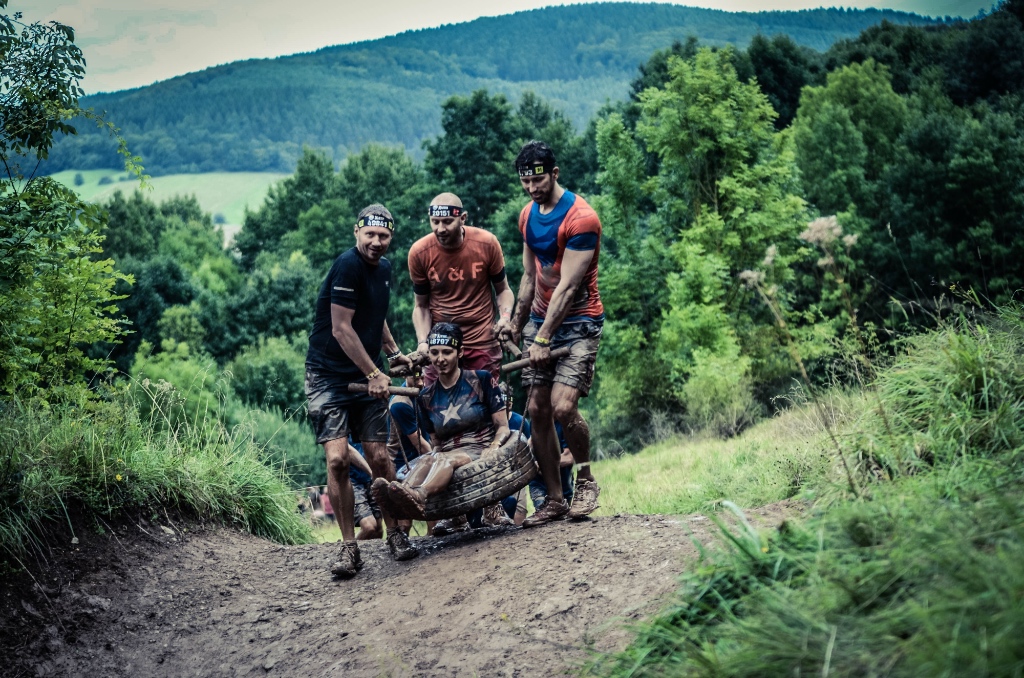
Start more steadily than feels necessary. Let faster racers pass, listen to the marshals and only accept help where the rules allow it. If an obstacle does not work out, follow the organiser’s retry or penalty rule. Drink according to your needs and use only familiar fuel on longer races. Safety always matters more than a placing.